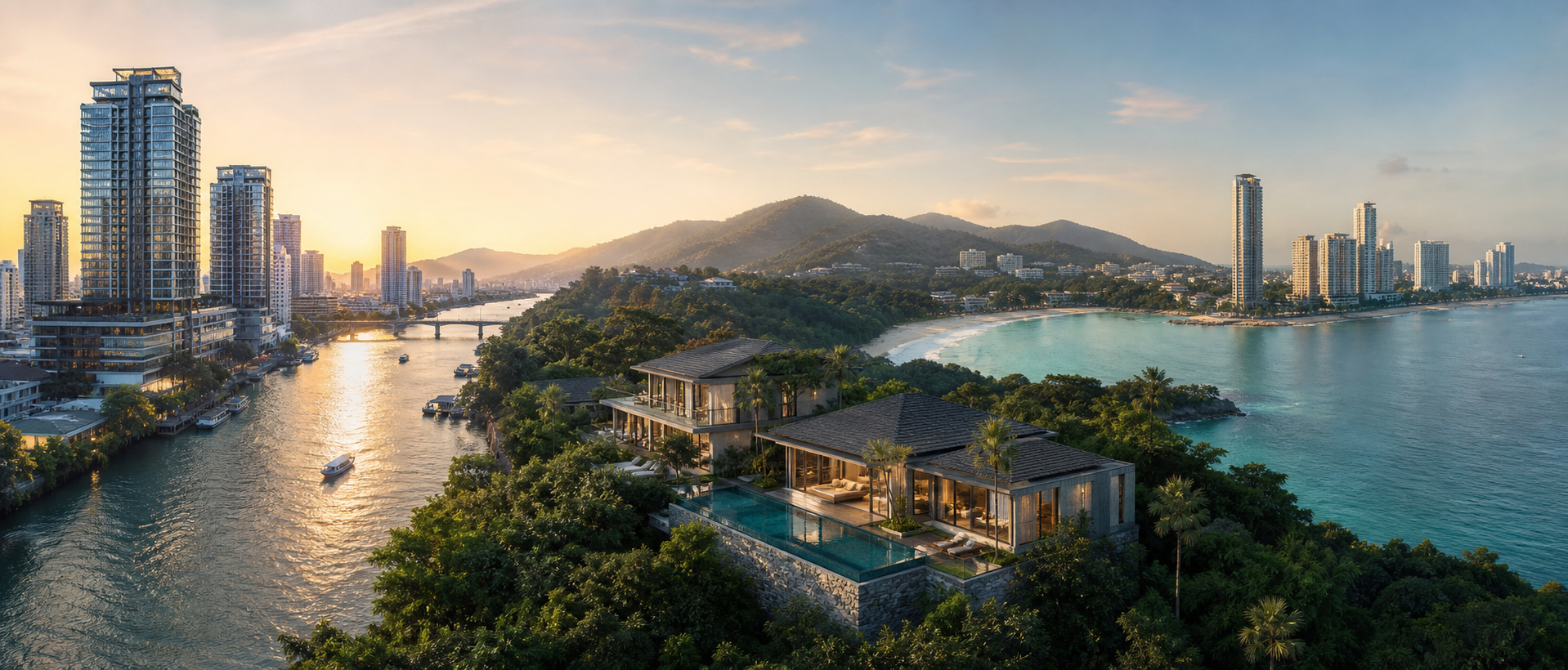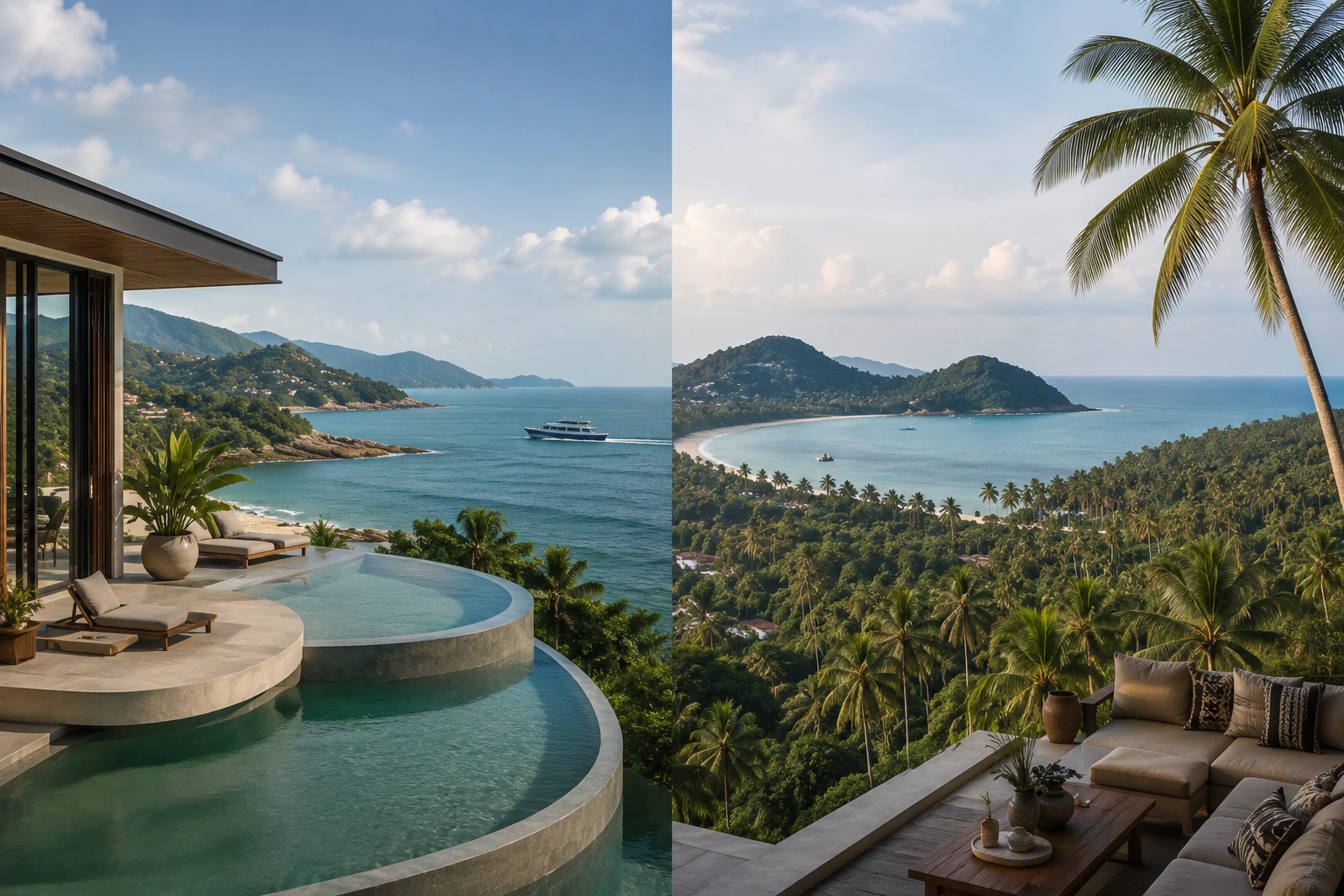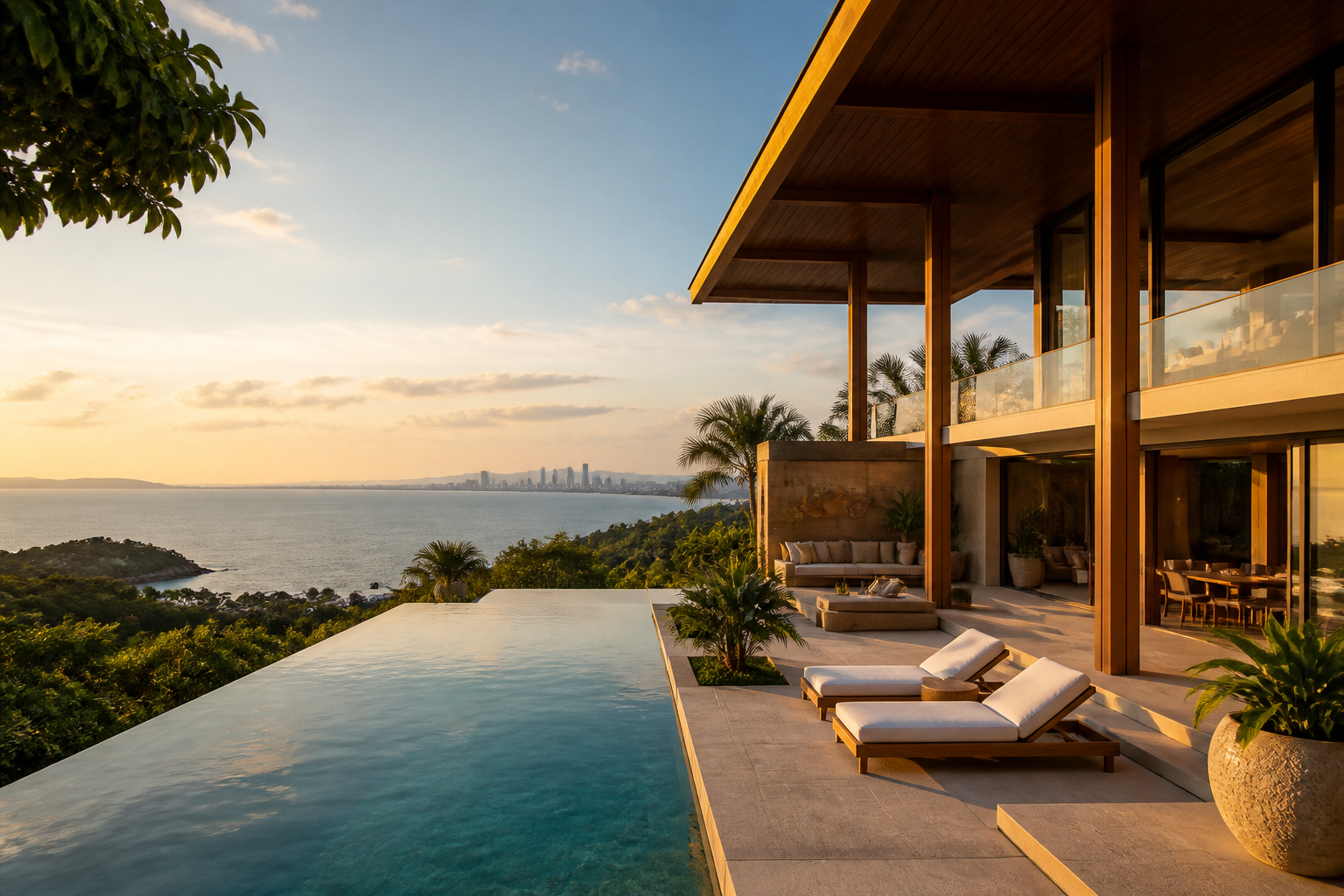
Thailand combines a tropical lifestyle, modern infrastructure, and a growing luxury property market. Buyers can choose from beachfront condominiums, branded residences, villas, and mansions. This guide covers key locations, property types, prices, ownership rules, investment potential, and due diligence of the luxury real estate in Thailand
Luxury Real Estate in Thailand: Market Overview
The luxury residential real estate market was evaluated at $73.7 billion in 2025, and it is projected to reach $112.39 billion by 2034. Thailand luxury property market share of every luxury property type looks as follows:
Luxury condominiums - 41%
Villas & Mansions - 34%
Other categories (Penthouses, townhouses, luxury apartments, etc.) - 25%
Key demand drivers
This rapid growth is a result of several trends and factors. They include:
High competition for luxury properties in Bangkok and other Thai cities
Restricted prime land supply
Extensive second home offer
Development of a infrastructure and hospitality ecosystem
Unique lifestyle amenities created to attract tourists
Lifestyle migration of high-net-worth individuals (Thailand shows a steady relative increase of ultra-wealthy individuals)
Availability of branded residences.
How Thailand compares with other Asian luxury markets
Thailand has become a top destination for purchasing managed villa estates and other resort-branded housing in Asia. It is enough to compare its offer to other leading luxury markets in this region
Feature | Thailand | Singapore | Seoul, South Korea | Bali, Indonesia |
Entrance price | From $50,000 - $80,000 for condos in non-prime areas | From $1.0 million to $1.5 million for private condos | From $1.0 million for an apartment in the centre | Apartments range from $150,000 to over $500,000 |
Lifestyle | Vibrant street culture, affordable living, luxurious beaches, and nice infrastructure | Ultra-clean, highly efficient, safe global financial hub with top-tier infrastructure and strict laws | Fast-paced, hyper-connected metropolis, access to public transit, rich food scene, and demanding work culture | Laid-back tropical island lifestyle, digital nomad hubs, and wellness retreats, alongside localized traffic congestion |
Ownership limitations | Not permitted for foreigners to own land freehold under the general rules | Landed properties have strict approval requirements, a 60 percent Additional Buyer’s Stamp Duty for foreign purchasers | Conditional bans now apply to foreign acquisitions in strategic areas, and certain transactions require approval | Provides Hak Pakai usage titles, valid for up to 80 years with renewals, rather than outright freehold |
What Defines a Luxury Property in Thailand?
When it comes to Thailand property investment, it is important to consider that price is not the only factor to consider when choosing real estate. You should also pay attention to:
Prime location
Scarcity of existing real estate
Privacy level
Availability of breathtaking views
The quality of construction and architectural style
The range of services
Legal title and management
Location, privacy, and scarcity
Prime beach and waterfront land is scarce, making location, development density and privacy key drivers of luxury property prices in Thailand. Direct shoreline access can command a significant premium, while low-density projects may offer stronger privacy and long-term appeal.
One more option to consider is a CBD address, which is usually located in proximity to top-tier offices, luxury retail, and international amenities and adds prestige to every luxury property for sale.
Design, construction, and services
High-net-worth buyers seek not only prime locations but also exclusive construction designs and distinctive architecture of the properties they choose for investment. Premium materials make real estate more exclusive, durable, and add long-term value. Smart-home systems provide convenience, security, and energy efficiency, while wellness features like spas, fitness facilities, and private wellness spaces are important for running a health-focused lifestyle. Investors are looking for top hotel-style services in their branded residences, including concierge, property management, and housekeeping, to enjoy a seamless ownership experience.
Best Locations for Luxury Real Estate in Thailand
Bangkok | Phuket | Koh Samui | Hua Hin, Pattaya, Chiang Mai | |
Dominant luxury property type | Condominiums, branded residences, penthouses | Villas, beachfront residences, branded resorts | Sea-view and beachfront villas | Condominiums, branded residences, villas |
Buyer profile | Local HNWIs, regional investors, expats, families | UHNW international buyers, second-home owners, investors | Lifestyle buyers, retirees, remote workers, European/Australian investors | Foreign investors, retirees, EEC executives |
Indicative price level | THB 250,000–600,000+ per sqm in CBD prime districts | THB 20–300+ million per villa | THB 15–250+ million per villa | THB 8–150+ million |
Rental seasonality | Low | High | High | Medium |
Liquidity | Very high | High | Medium-high | Medium |
Bangkok: luxury condos and urban branded residences
Bangkok's ultra-prime residential core includes several top neighbourhoods such as Central Lumpini, Langsuan, Wireless Road, and Sukhumvit. They appeal to buyers by limited land availability, proximity to CBD offices, embassies, luxury retail, five-star hotels, parks, and international lifestyle infrastructure. You can buy freehold Bangkok luxury condos with a high level of privacy and access to major transportation lines.
Phuket: resort villas and branded residences
Phuket luxury real estate is located in several premier areas. It makes sense to consider Bang Tao/Cherngtalay for the most complete luxury lifestyle ecosystem and high investment liquidity, or Layan with its scarcity-driven market with low-density development. Other leading locations are Surin with sea-view trophy residences and Kamala with strong resort-oriented rental fundamentals. You should consider Cape Yamu for panoramic views of Phang Nga Bay and a quieter residential environment, and Rawai/Nai Harn for quality beachfront property with long-term ownership appeal.
Koh Samui: private villas and lifestyle investment
The key established areas to buy Koh Samui luxury villas are Bophut, Choeng Mon, Chaweng, Lamai, and Taling Ngam. Bophut has a strong combination of lifestyle, infrastructure, and resale liquidity. Choeng Mon has an attractive long-term appeal, while Chaweng is prominent for high tourism exposure and competitive rental yields. Lamai features more favorable value positioning with lower entry prices, and Taling Ngam is characterised as an ultra-exclusive enclave focused on privacy, views, and trophy residences.
Hua Hin, Pattaya, Chiang Mai, and emerging markets
Thailand luxury property located in Hua Hin, Pattaya, Chiang Mai, and other emerging markets feature lower entry prices and rental yields. There is a restricted property offer in comparison with previous locations. They are preferred by families, retirees, buyers seeking affordable luxury property, and nature lovers. Hua Hin is known as Thailand's quiet luxury retirement market, while Chiang Mai is famous for its wellness and great lifestyle appeal. Pattaya is for investors seeking rental income and resort-style living.
Luxury Villas, Condos and Branded Residences
Characteristic | Luxury Villas | Condos | Branded Residences |
Property size | 250–2,000+ sqm land plots; 200–2,000+ sqm built area | 40–300+ sqm units; penthouses can exceed 500 sqm | 40–300+ sqm units; penthouses can exceed 500 sqm |
Privacy | High | Low | Medium |
Ownership options | Foreign buyers cannot own land in Thailand. Usually, this is leasehold ownership. | Foreign buyers can own condominium units under freehold ownership, with a quota of up to 49%. | Usually structured as condominium freehold ownership or leasehold ownership. |
Management burden | The highest. With full responsibility on the owner. | Medium. Owners mainly manage unit upkeep and rental arrangements. The rest is managed by the condominium juristic person. | Lower. Managed by professional hospitality teams. |
Fees | Often higher and variable | Monthly common area fees, usually the lowest | Highest service fees |
Rental model | Short-term luxury holiday rentals or seasonal rentals. They usually require a license under the Hotel Act. | Both long-term rentals and short-term holiday rentals. They usually require a license under the Hotel Act. | Operates under a hotel-style rental pool. |
Resale audience | UHNW individuals | Local buyers, expatriates, investors, and international purchasers. | International HNW buyers, investors, and lifestyle buyers. |
Private and managed luxury villas
Luxury villas in Thailand are mainly divided into two categories: standalone villas and managed estates. Each of them has a range of features.
Standalone Villa
| Managed Estate
|
Luxury condos and penthouses
Luxury condos in Thailand are usually located in proximity to business districts, transport, beaches, and lifestyle destinations, while penthouses have the most prestigious addresses with panoramic views, privacy, and scarcity value. Other similar options look as follows:
Freehold condominium ownership
A perfect combination of location, amenities, security, and convenience
CBD and resort format
Exclusive common areas and amenities
Smart home technology and a wide range of services
Fees cover building operations, facilities, security, and maintenance, plus private facilities for penthouses.
Branded residences
Speaking of branded residences Thailand offers both hotel-attached and standalone residences from premium brands and developing companies.
Hotel-attached branded residences
| Standalone branded residences
|
New-build, off-plan and resale property
Specialties | New-build property | Off-plan property | Resale property |
Benefits | Modern design, new facilities, latest standards, developer incentives | Lower entry price, wider choice of units, potential capital appreciation before completion | Immediate ownership, established location, real performance history |
Construction risk | Depends on the developer track record | High | Low |
Inspection | Limited specifications before completion | Based mainly on plans, models, and developer information | Full physical inspection possible |
Warranties | Developer warranties for structure, systems, and defects | Usually includes construction guarantees after completion | Limited; buyer relies on existing condition and maintenance history |
Liquidity | Depends on the project | Improves after construction | Depends on location, condition, and pricing |
Luxury Property Prices and Total Cost of Ownership
Luxury property in Thailand has different price ranges depending on the type, location, tenure, view, brand, and other aspects. Mid-market real estate costs between 2.8 million THB to 9.4 million THB. Coastal villas in Phuket and Samui are estimated at 14 million to 47 million THB. The average price for the Layan luxury villa segment is THB 285 million per unit. For Bang Tao, this amount is about THB 255.8 million, and for Kamala, it is THB 234.3 million, according to market reporting published in June 2026.
What determines the purchase price?
Bangkok and Phuket have the most expensive real estate in Thailand. Bangkok premium areas like Wireless Road, Thonglor, and the Chao Phraya Riverside have prices that exceed 350,000 to 600,000+ THB per sqm. Phuket's ocean-view estates located in Kamala’s "Millionaire’s Mile", Bang Tao, and Cape Yamu have prices ranging from 100 million to over 1 billion+ THB. The sea view condos have a 20% to 50% price increase, while beachfront access adds from 30% to 100% in value. In C9 Hotelworks' Phuket data for 2025, branded condominiums averaged about THB 181,000 per sq m versus THB 141,000 per sq m for non-branded units, which is a reported premium of approximately 28%. Branded landed properties showed a much wider pricing gap. Brand-new, off-plan property in Thailand, as well as 0 to 2-year-old units, boast the highest luxury real estate prices.
Transaction costs and taxes
The total cost of property ownership requires approximately 2.5–6.5%+ of the property value for transaction-related costs. The range depends on the type, seller status, holding period, and applicable taxes. These costs may include:
The government transfer fee of 2% (Reduced transfer and mortgage registration fee of 0.01% is applied for Thai natural buyers and a property sale/appraisal price up to 7 million THB from July 1, 2026, till June 30, 2027)
Specific Business Tax (SBT) of 3.3% (it includes the statutory rate of 3.0% plus local tax equal to 10% of the SBT)
Stamp Duty of 0.5% (THB 1 per THB 200 or fraction, is exempt for receipts subject to SBT)
Variable withholding tax
Legal fees, which typically range from THB 50,000 to THB 300,000, depend on the complexity of the transaction.
Rental income generated from Thai property is subject to taxation under Section 40(5) of the Revenue Code. It isn't a single universal rate. The standard withholding of 5% under Departmental Order T.P.4/2528 for rental payers who process funds to individual taxpayers or companies running business in Thailand. The temporary e-withholding concession of 1% ended on December 31, 2025. Payments of income under Section 40(5) or 40(6) can be subject to a 15% tax under Section 50(3) for non-resident taxpayers and foreign companies. You should check the applicable rate and final tax liability against the landlord's tax status, the rent payer, and any relevant tax treaty.
Recurring ownership costs
When calculating potential branded residence management fees, consider the following expenses for every type of real estate.
Luxury and branded condominiums
CAM Fee (Common Area Maintenance): 80 to 150 THB per sqm/month for standard luxury, up to 180 to 300+ THB per sqm/month for branded residences with management and administration included.
Sinking Fund (Capital Reserve): one-time payment of around 600 to 1,200 THB per sqm.
Refurbishment Reserve (FF&E Fund): 2% to 5% of gross rental revenue.
Property Insurance: roughly 5,000 to 15,000 THB annually.
Private luxury villas
Estate Common Area Fees: from 8,000 to 20,000 THB monthly
Pool and Garden Servicing: 6,000 to 12,000 THB monthly
Villa Maintenance: 50,000 to 150,000 THB annually
Personnel Wages: 15,000 to 25,000 THB monthly for a maid
Services of Villa Management Agency: 5,000 to 15,000 THB monthly
Insurance: 25,000 to 60,000 THB annually
How Foreigners Can Buy Luxury Property in Thailand
Foreign property ownership in Thailand is different depending on the type of property you want to own.
Foreign freehold condominium ownership
Foreigners can own up to 49% of the total floor area of any residence (condo) building according to the Condominium Act B.E. 2522.
To qualify for foreign ownership of a freehold condominium in Thailand, it is important to preserve bank evidence linking the incoming funds of $200,000 and more and process a transfer following remittance instructions. You need to identify the purpose, project, unit, and buyer. The exact bank certificate or the evidence of foreign-exchange transaction to be delivered to the Land Offic depend on the legal category of the buyer and the transaction. The route for permanent residents is different. It is necessary to confirm the required documentation with the receiving bank and the Land Office before you transfer funds.
When the transfer is completed, the buyer's name is recorded on the condominium title deed.
Villas, buildings, and land leasehold
Foreign nationals generally can't acquire freehold ownership of land in Thailand, so most real estate transactions are performed through leasehold arrangements for a period of up to 30 years according to the Thai Civil and Commercial Code. Such agreements for leasehold property in Thailand may contain renewal provisions, but it shoudn't be marketed as already secured or registered 60- or 90-year ownership interests. The Thai court held that the renewal of this leasehold isn't guaranteed, so all the renewals are reviewed separately.
However, there is a narrow exception according to the Land Code (Section 96) that allows owning up to 1 rai of land for personal residence if you meet statutory conditions, including a minimum of THB 40 million of qualifying investment to be maintained for a period of 5 years or more, located in an eligible area, and approved by the Ministry of Interior.
Thai company structures and legal risk
A Thai company shouldn't be used as a nominee structure to circumvent foreign land-ownership restrictions. The Foreign Business Act (Section 36) prohibits nominee shareholding and related assistance. Thai authorities closely scrutinise nominee arrangements created to bypass foreign ownership restrictions in 2026. Investors should seek independent legal advice and ensure that any corporate structure has a genuine commercial purpose and complies with Thai corporate and property laws. It should have a lawful ownership and governance structure, genuine commercial substance, and a real business purpose.
Title deeds and ownership documentation
Property title deeds and ownership documentation cover Chanote title deed, condominium title deed, lease registration, as well as the property due diligence in Thailand, to be completed by buyers. Before you buy luxury real estate, you should also verify the following:
Encumbrances: verification of mortgages, liens, easements, usufructs, and other registered restrictions.
Access rights: confirmation of legal road access and registered rights of way.
Boundaries: comparison of physical boundaries with official cadastral records and title deed information.
Investment Potential: Rental Yield, Appreciation, and Liquidity
When purchasing real estate, it is important to distinguish between a lifestyle purchase meant for personal use and investment property that should meet a number of criteria to have a high potential resale value. Investment property is usually selected on the basis of measurable financial indicators that include not only price and rental demand but also occupancy rates, maintenance expenses, taxes, management costs, and liquidity.
Any advertised projections you can come across shouldn't be taken for granted since the evaluation of a property’s investment potential should involve projected gross returns, actual net income after expenses, and realised resale results.
Gross and net rental yield
Gross rental yield is annual gross rental income divided by the purchase price. Net rental yields in Thailand comprise this price with the deducted operating expenses like property management commission, maintenance, repairs, insurance, taxes, utilities, etc. Since these expenses vary significantly by project and rental model, there is no reliable universal rule that net yield is always a specific percentage below gross yield.
Capital appreciation and resale liquidity
Capital appreciation and resale liquidity are dependent on land scarcity, product quality, location fundamentals, and the size of the future buyer pool. The transaction time matters a lot as well since prime freehold condominiums are likely to attract more potential buyers in a shorter period of time than branded residences and villas.
Rental pools and guaranteed-return programs
Many resort condominiums, branded residences, and other investment-oriented real estate offer rental pool or guaranteed-return programs. A rental pool includes the combination of revenue generated from the participating units and distributes this income among owners using a previously negotiated formula. A guaranteed-return program typically promises a fixed annual return for a specified period. No matter what program you are offered to consider, there are several factors to include:
Contract term with renewal conditions, exit penalties, and transfer restrictions.
Owner-use restrictions like limits on personal stays or booking requirements
Reserve funds: extra expenditures on maintenance, refurbishment, and others.
Operator risk with the consideration of brand reputation, operational experience, and track record.
Currency and portfolio considerations
Overall returns are affected by currency transfer requirements and portfolio concentration in particular. All expenditures connected with investment property are denominated in Thai baht (THB), so THB exposure is an important consideration since the return converted back to the home currency can be lower than expected. All the repatriation documents should be retained for the whole ownership period. And it is important to consider the diversification of the investment portfolio to minimise the risk of concentrating most wealth in a single property.
How to Choose and Buy a Luxury Property
The buying process typically involves five steps.
Define the purchase objective and budget
Decide the objective of buying luxury real estate: as a primary residence, second home, rental investment, or capital preservation asset. Pay attention to the total investment budget instead of the purchase price, since it can also include transfer fees, taxes, legal expenses, due diligence costs, furnishing, and more.
Compare locations and property formats
Select property on the basis of a structured decision matrix that includes multiple factors: lifestyle suitability, ownership options, rental yield, privacy, and resale liquidity.
Appoint an independent lawyer and technical inspector
Appoint an independent Thai property lawyer who does not represent the developer, seller, or agent.
Reservation, due diligence, and contract review
Before paying a reservation deposit, confirm refund and forfeiture conditions. The contract should specify payment milestones, completion dates, warranties, and the developer's obligations.
Funds transfer, registration, and handover
Before handover, complete the snagging inspection, inventory check, and utility transfers, and review the management agreement.
Key Risks and Due Diligence Checks
Buyers should use a practical due diligence checklist to verify the property's legal status, physical condition, financial obligations, and resale potential. The aspects worth checking are listed below.
Title, permits, zoning, and legal access
Key due diligence checks include:
Title chain (including mortgages, liens, easements, usufructs, or other encumbrances)
Building permits
Environmental Impact Assessment (EIA)
Applicable land-use and building regulations known as zoning
Registered access to a public road
Developer and operator due diligence
Buyers should assess both the developer and the hotel or property operator, where applicable. The key checks are:
Track record
Financial capacity
Construction delays
Litigation and disputes
Hotel/operator agreement
Construction, climate, and insurance
Thailand's climate and geographic conditions can create additional risks for luxury properties, so it is necessary to conduct a technical assessment of:
Drainage
Slope stability
Corrosion
Flooding
Water supply
You should also verify the insurance contents since new coverage may be required after purchase.
Common red flags
What signs should prompt additional checks or even lead a buyer to reconsider the purchase of a luxury property? They are:
Yields without a supporting model
Pressure selling
Unclear land rights
Undocumented extensions
Unrealistic lease promises